
In hospitals and other healthcare facilities, REIC Specialty understands that environmental control isn’t just about comfort—it’s a critical component of clinical infrastructure. The right balance of temperature, humidity, airflow, and pressure forms the foundation for infection prevention, equipment protection, and safe patient care. Even brief deviations can create a cascade of operational challenges, including delayed procedures, halted pharmacy compounding, backlogged sterile processing, or idle imaging suites.
REIC Specialty recognizes that moisture and temperature management lie at the heart of this delicate ecosystem. Elevated humidity can foster microbial growth and condensation, while excessively dry air increases static, affects mucosal health, and jeopardizes precision processes. Meanwhile, temperature fluctuations impact patient comfort, staff efficiency, and the performance of sensitive medical equipment.
In healthcare environments where every second and every degree matter, REIC Specialty delivers precise, reliable climate control solutions—because in critical spaces, downtime is never an option.
Where Conditions Matter Most
Different clinical spaces have distinct environmental needs. A one-size-fits-all approach doesn’t work; solutions must be tailored to the clinical function, risk level, and building constraints.
- Operating Rooms & Procedure Suites
Require tightly controlled temperature and relative humidity with consistent air exchanges. Stable conditions help limit condensation on equipment, reduce the risk of corrosion, and support infection prevention protocols—all while maintaining patient thermal comfort.
- Sterile Processing Departments (SPD)
Moisture control is essential throughout the entire process, from decontamination to packaging and storage. Excess humidity slows drying, invites biofilm formation, and can compromise sterility maintenance.
- Pharmacy Compounding (Non-sterile & Sterile)
Temperature and humidity stability are integral to product integrity and regulatory compliance. Even modest excursions can trigger batch rework or disposal, which can impact medication availability.
- Isolation Rooms & Negative-Pressure Zones
Pressure differentials are the frontline for airborne containment. The climate system must hold temperature and humidity targets while preserving directional airflow and proper filtration.
- Imaging Suites (MRI/CT/Nuclear Medicine)
Sensitive electronics and magnets demand narrow temperature ranges and consistent moisture control to prevent condensation, reduce static risk, and avoid unplanned equipment downtime.
- NICUs & Critical Care
Patient outcomes are closely tied to microenvironment stability. Fluctuations can stress fragile patients, while maintaining humidity and temperature stability contributes to infection control and overall comfort.
The Hidden Costs of Humidity & Temperature Drift
When moisture and temperature slip out of range, hospitals pay twice—first in clinical risk, then in operational disruption:
- Infection Risk & Quality Metrics: Sustained humidity spikes can foster microbial growth and surface condensation, challenging cleaning protocols and environmental services.
- Asset & Building Protection: Moisture accelerates corrosion of surgical devices and air handlers, warps casework, and damages floor systems and finishes.
- Equipment Downtime: Imaging, sterilizers, and monitors are sensitive to environmental swings. Out-of-tolerance spaces can force cancellations and rescheduling.
- Regulatory & Accreditation Pressure: Persistent excursions can create deficiencies that trigger audits, corrective actions, or reduced capacity.
- Energy Waste: “Blunt force” heating or cooling without humidity control often wastes fuel or electrical energy while failing to resolve the root problem—moisture.
A Coordinated Approach: Temperature, Humidity, Airflow, Pressure
Hospitals need integrated environmental control—not isolated fixes. The most reliable strategy coordinates four levers:
- Temperature Control: Right-sized heating for winter loads and supplemental cooling where process heat or dense equipment is present.
- Moisture Control: Dehumidification (or, when needed, humidification) sized for the space, the moisture load, and occupancy patterns.
- Air Movement & Filtration: Proper distribution is ensured with HEPA-capable air scrubbers, where required, to maintain cleanliness and support infection prevention.
- Pressure Relationships: Negative or positive pressure support for isolation, sterile storage, or procedure rooms; maintained even during mechanical outages or renovation.
REIC Specialty Solutions for Healthcare Facilities
When permanent HVAC systems are under renovation, overloaded, or compromised by weather events, REIC Specialty deploys turnkey, medical-grade temporary solutions designed around clinical continuity, safety, and compliance.
Desiccant Dehumidification
Best for: Low-temperature, high-load drying; large volumes; moisture intrusion response.
- Performs effectively even in cool temperatures.
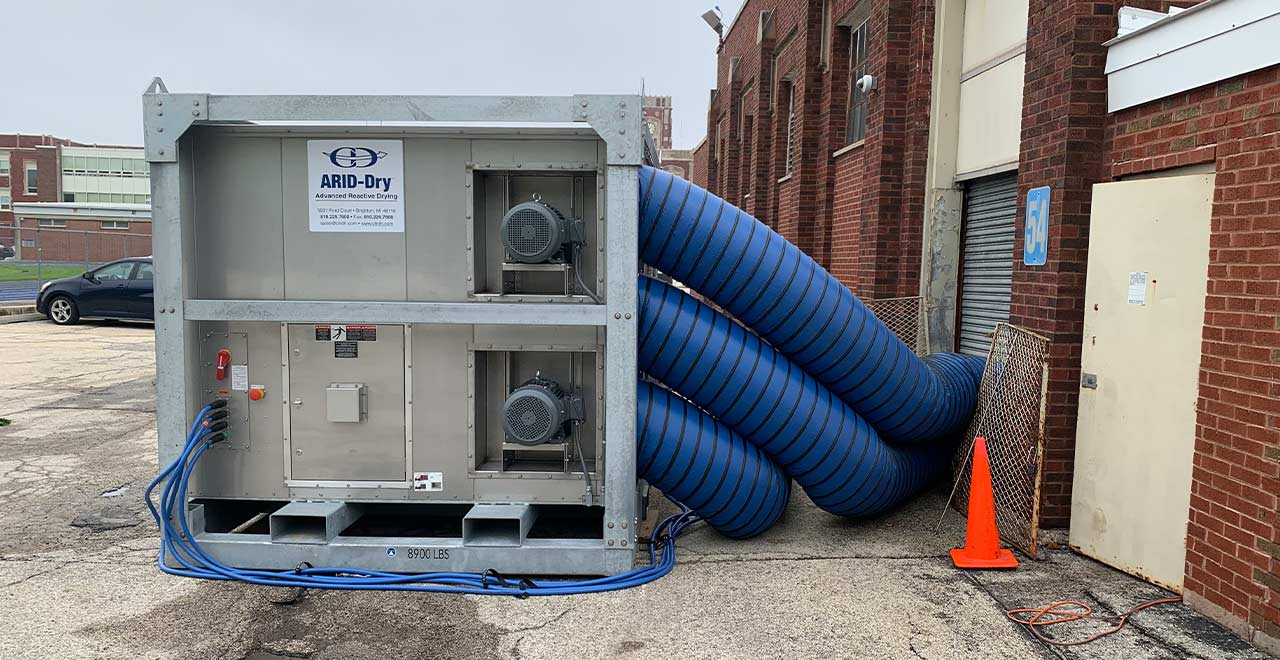
- Ideal for restoring procedure suites, sterile processing departments, and imaging areas after water events to prevent microbial growth and corrosion.
Refrigerant Dehumidifiers
Best for: Finished spaces with moderate loads.
- Portable and energy-efficient for targeted areas, such as medical-surgical floors, pharmacy support areas, and administrative zones.
Industrial Heating (Indirect-Fired & Flameless)
Best for: Maintaining setpoints without adding combustion byproducts into clinical air.
- Indirect-fired units deliver clean, dry air through ducting; flameless options support sensitive or restricted environments and provide high static pressure for long duct runs.
Make-Up Air & Filtration Support
Best for: Renovations, decant spaces, or surge areas.
- Supports pressure relationships and integrates with HEPA air scrubbers or negative air machines to preserve directional airflow and cleanliness.
Integrated Controls & Monitoring
Best for: Tighter tolerances and documentation.
- Sensor arrays track temperature and relative humidity trends; remote monitoring helps facilities teams adjust in real time and retain records for quality programs.
Scenario: OR Suite Renovation with Zero Downtime
A hospital needs to phase-renovate its operating rooms while maintaining full surgical capacity and avoiding the cancellation of elective procedures.
REIC Specialty would design a temporary climate control strategy to maintain compliance and protect patient safety. The team would stage indirect-fired heaters to meet winter heating loads and pair them with desiccant dehumidifiers to control relative humidity. Airflow would be routed through temporary ducting to maintain the required air exchange rates, while portable HEPA filtration units would supplement the air quality throughout the renovation zones.
As a result, environmental conditions would remain consistent and validated through continuous monitoring, allowing the hospital to proceed with renovations seamlessly—without compromising patient care or surgical schedules.
Implementation Best Practices for Hospitals
- Start with a Risk Map
Prioritize critical spaces (OR, SPD, pharmacy, imaging, NICU). Identify environmental tolerances, pressure requirements, and emergency pathways. - Right-Size for the Load
Consider envelope leakage, occupancy, infiltration from adjacent construction, and process heat. Oversizing wastes energy; undersizing risks excursions. - Protect Pressure Relationships
Heating and drying strategies must preserve negative or positive pressure where required. Plan for make-up air and controlled exhaust. - Monitor & Document
Continuous, calibrated sensing of temperature and RH supports compliance and rapid decision-making. Trend data helps fine-tune equipment and defend quality outcomes. - Plan for Redundancy
Critical areas deserve contingency capacity—hot-swappable units, backup power strategies, and alternate duct paths. - Coordinate with Infection Prevention & Facilities
Align temporary systems with cleaning protocols, construction ICRA measures, and staff workflows to minimize disruption.
The REIC Specialty Advantage in Healthcare
Hospitals partner with REIC Specialty because we deliver more than equipment—we deliver clinical-grade continuity:
- Turnkey Deployment: Site assessment, engineering, installation, balancing, and removal—managed by experienced technicians who understand healthcare environments.
- Speed & Scale: A network of locations across North America enables 24/7 rapid response for outages, weather events, and surge needs.
- Tailored Solutions: From a single isolation room to an entire procedural floor, systems are right-sized and integrated with existing infrastructure.
- Safety & Compliance: Equipment and methods align with healthcare best practices; documentation and monitoring support your quality and accreditation programs.
- Minimal Disruption: Quiet operation, clean duct routing, and compact footprints help maintain patient experience and staff efficiency.
Be Ready Before Conditions Drift
A stable clinical environment isn’t negotiable. With a proactive plan and a trusted partner, hospitals can avoid costly downtime, protect high-value assets, and maintain uninterrupted patient care—no matter the season.
Let’s safeguard your critical spaces. Connect with REIC Specialty today to develop a moisture and temperature readiness plan, arrange renovation support, or schedule a rapid-response deployment for your facility.